The Commercial Building Maintenance Checklist for Toronto and the GTA, Ontario
A Practical Guide to Safer, Cleaner, and Better-Maintained Commercial Properties

Introduction
Commercial buildings across Toronto and the Greater Toronto Area (GTA) face year-round maintenance demands. From harsh winter weather and snow accumulation to summer heat, heavy occupancy, aging infrastructure, and daily wear, property owners and facility managers need a structured maintenance system.
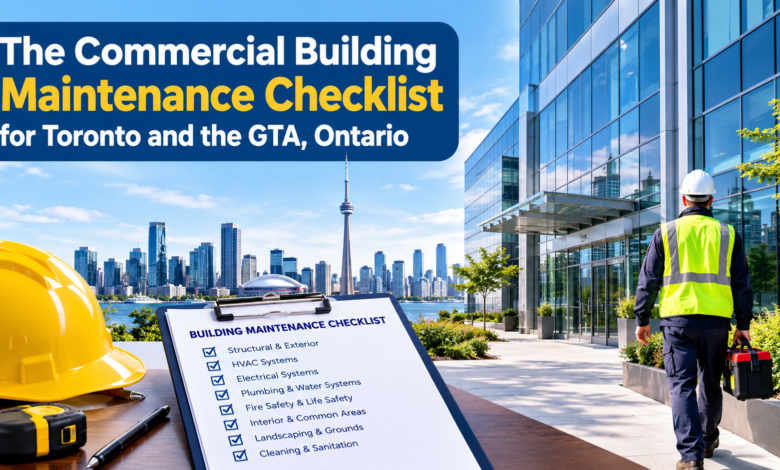
The Commercial Building Maintenance Checklist for Toronto and the GTA, Ontario provides a practical framework for monitoring the major areas of a commercial property. Regular inspections can help identify problems earlier, support occupant safety, reduce unexpected repair costs, and help property owners meet applicable maintenance requirements.
Toronto’s Property Standards Bylaw establishes minimum standards for property maintenance, including requirements related to structural conditions, roofs, plumbing, ventilation, stairs, handrails, cleanliness, and other building elements.
Why Commercial Building Maintenance Matters
A commercial property is a combination of interconnected systems. A small roof leak can eventually affect ceilings, electrical equipment, insulation, and interior finishes. Poor ventilation can affect indoor comfort and contribute to maintenance problems.
A preventive approach allows property managers to identify developing issues before they become major failures.
Maintenance should generally cover:
- Building structure and exterior
- Roof and drainage systems
- HVAC and ventilation
- Electrical systems
- Plumbing
- Fire and life-safety equipment
- Interior areas
- Parking and exterior grounds
- Cleaning and waste management
- Maintenance records and inspections
The exact inspection frequency should depend on the building’s age, design, occupancy, equipment, manufacturer’s requirements, applicable laws, and recommendations from qualified professionals.
1. Inspect the Building Exterior
The exterior is the first line of protection against weather and environmental conditions.
During routine inspections, check walls, windows, doors, exterior finishes, loading areas, balconies, stairs, ramps, handrails, and other accessible structures for visible deterioration.
Look for:
- Cracks or damaged masonry
- Deteriorated sealants
- Damaged exterior panels
- Broken windows or doors
- Loose materials
- Corrosion
- Damaged stairs or handrails
- Water infiltration
- Unsafe walking surfaces
Toronto’s property standards require structures and related components to be maintained in a safe and good state of repair.
2. Check the Roof and Drainage
Toronto and the GTA experience snow, freezing temperatures, rain, and freeze-thaw cycles that can place considerable stress on commercial roofs.
A regular roof inspection should examine:
- Roofing membranes
- Flashing
- Roof drains
- Gutters and downspouts
- Drainage routes
- Roof penetrations
- Signs of leaks
- Damaged insulation
- Loose or deteriorated materials
Toronto’s Property Standards information states that roofs must be maintained in good condition, weatherproof, free from leaks, and free from loose or unsafe materials. It also addresses dangerous accumulations of snow and ice.
3. Maintain HVAC and Ventilation Systems
Heating, ventilation, and air-conditioning systems are critical to commercial building comfort and indoor environmental conditions.
Maintenance teams should monitor:
- Filters
- Air-handling equipment
- Heating equipment
- Cooling equipment
- Thermostats and controls
- Belts and moving components
- Condensate drainage
- Ventilation equipment
- Unusual sounds or odours
Toronto’s property standards require adequate ventilation and state that ventilation systems and units must be regularly cleaned, maintained, and kept in good working condition.
Equipment should also be serviced according to manufacturer recommendations and applicable professional requirements.
4. Inspect Electrical Systems
Electrical maintenance should be handled carefully, particularly in older commercial properties.
Routine visual checks can identify:
- Damaged outlets
- Broken switches
- Exposed wiring
- Overheated equipment
- Damaged electrical panels
- Flickering lighting
- Failed exterior lighting
- Problems with emergency lighting
Qualified electrical professionals should perform work that requires specialized knowledge, testing, repair, or authorization.
Keeping electrical documentation organized can also make future troubleshooting and inspections easier.
5. Review Plumbing and Water Systems
Water leaks can cause significant damage when they remain unnoticed.
Inspect:
- Supply pipes
- Drain lines
- Faucets and fixtures
- Toilets and washrooms
- Water heaters
- Pumps
- Shut-off valves
- Floor drains
- Mechanical-room plumbing
Toronto’s property standards specify that plumbing systems must be maintained in good working order and kept free from leaks or defects.
After severe weather or building work, additional checks may be appropriate.
6. Include Fire and Life-Safety Systems
Fire safety deserves particular attention because commercial buildings can contain many occupants, electrical systems, storage areas, mechanical equipment, and specialized operations.
The maintenance program should account for applicable fire-safety equipment and procedures, including required inspection, testing, notification, and maintenance activities.
Ontario’s Fire Code includes requirements covering fire protection equipment and inspection, testing, notification, and maintenance of fire emergency systems in high buildings.
Property managers should maintain required records and use qualified professionals where specialized inspection or testing is required.
7. Check Interior Areas and Common Spaces
Interior inspections should cover offices, corridors, stairwells, washrooms, storage rooms, mechanical rooms, entrances, and other shared areas.
Look for:
- Damaged flooring
- Ceiling stains
- Water damage
- Broken doors
- Damaged handrails
- Poor lighting
- Blocked pathways
- Damaged walls
- Moisture problems
- Unsafe surfaces
Stairs, ramps, loading docks, balconies, fire escapes, guards, handrails, and related components are specifically addressed by Toronto’s property standards.
8. Maintain Parking Areas and Exterior Grounds
Exterior maintenance goes beyond the building itself.
Inspect parking lots, sidewalks, entrances, loading areas, landscaping, drainage routes, lighting, signs, and waste-storage areas.
Seasonal attention is especially important in Toronto and the GTA. Before and during winter, property teams should have procedures for snow and ice management, drainage, entrances, and outdoor safety.
The City of Toronto Municipal Code includes separate provisions concerning snow and ice removal, while property standards also address safe conditions around buildings and structures.
9. Keep the Property Clean and Sanitary
Cleaning is an important part of commercial building maintenance rather than simply an aesthetic task.
A maintenance plan should address:
- Washrooms
- Common areas
- Waste containers
- High-touch surfaces
- Mechanical areas
- Loading areas
- Parking areas
- Exterior walkways
- Pest-control concerns
Toronto’s property standards require properties to be maintained appropriately, including requirements concerning cleanliness and pest conditions.
10. Create a Seasonal Maintenance Schedule
A Toronto-area maintenance program should adapt to the seasons.
Spring
Inspect roofs after winter, examine exterior surfaces, clean drainage systems, review landscaping, and identify damage caused by freezing temperatures.
Summer
Monitor HVAC performance, ventilation, exterior surfaces, landscaping, and drainage. Address developing air-conditioning or moisture problems before they become larger issues.
Fall
Prepare heating systems, inspect roofs and drainage, clean gutters where applicable, check exterior lighting, and prepare the property for winter.
Winter
Monitor snow and ice conditions, protect vulnerable plumbing, inspect entrances and exterior areas, and respond promptly to weather-related damage.
11. Maintain Detailed Inspection Records
A checklist becomes much more useful when inspections are documented.
Records can include:
- Inspection date
- Area inspected
- Problem identified
- Photographs
- Recommended action
- Person responsible
- Repair date
- Contractor information
- Follow-up inspection
- Maintenance cost
Good records also help property managers understand recurring problems and plan capital improvements.
12. Stay Aware of Ontario and Toronto Requirements
Commercial property maintenance should not rely on a generic checklist alone. Requirements can vary according to the property’s location, use, construction, occupancy, equipment, and applicable regulations.
Ontario’s current Building Code framework includes requirements relating to areas such as public health, fire protection, accessibility, and structural sufficiency. The province’s 2024 Building Code came into effect on January 1, 2025, with transition provisions applying to certain projects.
Toronto also continues to review and update its property-maintenance regulations. City Council adopted amendments to Chapter 629 in November 2025, with those amendments generally scheduled to come into force on May 1, 2027.
For properties outside Toronto, GTA municipalities may have their own bylaws and enforcement processes, so property managers should verify the requirements applicable to the specific municipality.
Final Commercial Building Maintenance Checklist
Before closing each inspection cycle, property managers can review the following:
- Exterior structure inspected
- Roof and drainage checked
- Windows and doors inspected
- HVAC serviced
- Ventilation checked
- Electrical concerns identified
- Plumbing checked for leaks
- Fire-safety systems maintained as required
- Interior spaces inspected
- Stairs and handrails checked
- Parking and exterior areas reviewed
- Snow and ice risks addressed seasonally
- Cleaning and waste procedures completed
- Pest concerns addressed
- Maintenance records updated
- Outstanding repairs assigned
- Follow-up dates scheduled
Conclusion
A reliable commercial building maintenance program is built around prevention, documentation, and regular inspections. For properties throughout Toronto and the GTA, seasonal weather and changing regulatory requirements make organized maintenance particularly important.
Using The Commercial Building Maintenance Checklist for Toronto and the GTA, Ontario as a starting point can help property owners and facility managers systematically review the building’s major systems. However, a checklist should complement—not replace—required inspections, professional assessments, manufacturer’s maintenance instructions, and applicable municipal and provincial regulations.